
Rice Supply Under Pressure: When Price Controls Meet Rising Costs
Tensions around the Strait of Hormuz are adding a new layer of pressure to Indonesia’s rice market, already strained by El Niño. The recent disappearance of…
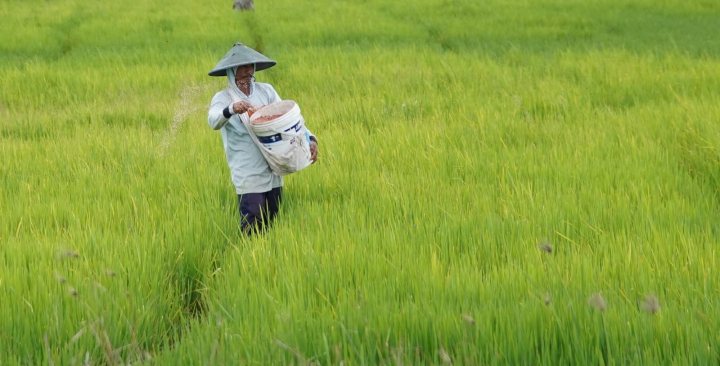
Tensions around the Strait of Hormuz are adding a new layer of pressure to Indonesia’s rice market, already strained by El Niño. The recent disappearance of some rice products from retail shelves offers a reminder of a basic economic principle: people respond to incentives, and policy intentions do not always translate neatly into market outcomes.
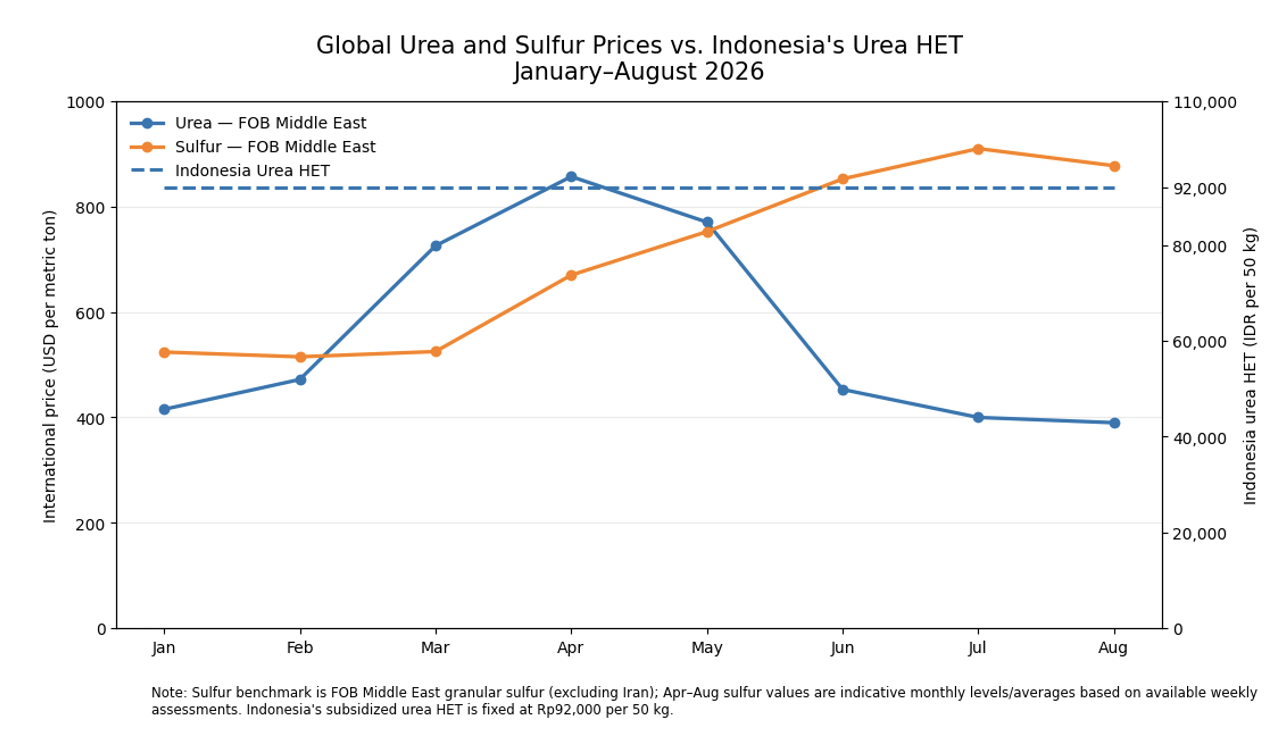
The squeeze starts upstream. The Middle East crisis has pushed up energy and agricultural input costs. The price of sulphur, an important fertilizer input, has risen by more than 110% since the start of the year, while international urea prices have increased by around 19% over the same period.
Indonesia, meanwhile, regulates subsidised fertilizer prices. The maximum retail price (HET) for subsidised urea has remained at Rp90,000 per 50kg bag since October 2025, when the government cut it by 20% from Rp112,500. The lower HET is intended to protect farmers from rising input costs. But as input and distribution costs increase, the regulated price does not always translate into the price farmers actually pay. Reports from several regions indicate that some farmers are paying above the official ceiling. For farmers preparing to plant, paying more can be preferable to not obtaining fertilizer at all.
The squeeze continues downstream. By August, harvested dry paddy was trading at around Rp7,400–8,000 per kilogram in some markets, already above the government's Rp6,500 purchase-price floor. The price floor is therefore no longer binding. At the milling level, BPS recorded premium rice at Rp15,062 per kilogram in August, up 10.07% year on year. This means that even before distribution costs and retail margins are added, the price at the mill has already exceeded the Rp14,900 retail HET for premium rice in Java.
For rice businesses, the arithmetic is becoming difficult. Selling at the economic price risks breaching the HET; selling at the HET can mean taking a loss. One response has been product differentiation. Fortified rice falls under the “special rice” category. Although fortification adds to production costs, special rice is not subject to the HET, allowing it to be sold above the regulated price for premium rice.
But that avenue has narrowed. Following the government's finding that 25 of 27 tested fortified-rice brands did not meet applicable standards, many fortified-rice products have disappeared from the market. And it is only September. With El Niño expected to persist into early next year, rice availability at retail could come under further pressure.
For consumers, availability matters alongside affordability. Higher prices may affect purchasing power, but empty shelves can impose an even greater welfare cost: consumers lose the ability to choose, substitute and ration their own consumption.
SPHP rice from Bulog should therefore fill the gap left by disappearing private supply, particularly given Bulog’s public mandate, state-budget support and substantial rice stocks. “Stocks sitting in warehouses do not bring prices down. Supply in the retail market does,” said Chief Economist IBC Denni Purbasari.
In addition to releasing SPHP rice into the market, Denni said the government should review the current rice HET. “Production costs have increased significantly. Fertilizer, for example, accounts for around 10–25% of rice production costs. An increase in the rice HET can therefore be justified,” she said.
A better-aligned HET would give private suppliers room to return premium rice to retail shelves. As supply recovers, rice inflation should ease, while the resulting increase in the poverty line can be minimised.