IBC Puts Private-Sector Readiness at the Centre of ASEAN Energy Security
The Indonesian Business Council (IBC) and the Economic Research Institute for ASEAN and East Asia (ERIA) convened a high-level dialogue in Singapore on 30 July…
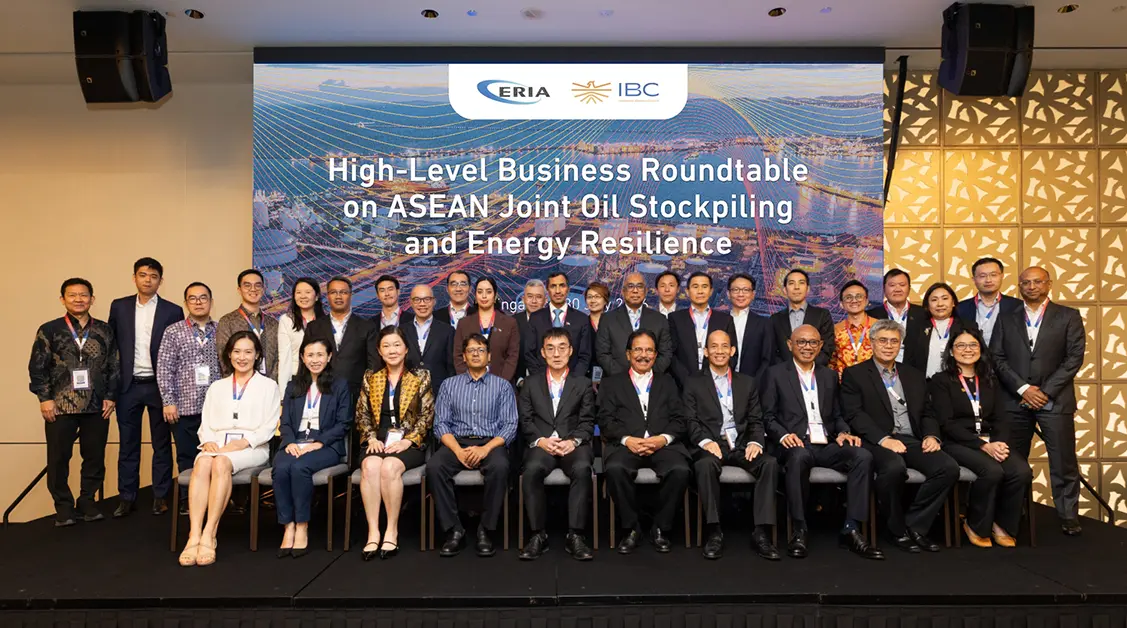
The Indonesian Business Council (IBC) and the Economic Research Institute for ASEAN and East Asia (ERIA) convened a high-level dialogue in Singapore on 30 July 2026 to strengthen the private sector’s role in shaping ASEAN’s response to future oil supply disruptions. The roundtable brought together representatives from energy companies, investors, storage operators, sovereign wealth funds, and other regional stakeholders to assess what would be required to turn the concept of ASEAN joint oil stockpiling into a workable regional system.
For IBC, the central question is not only whether ASEAN needs a shared emergency reserve, but whether the mechanism can attract investment, use existing commercial infrastructure, and operate under clear rules when disruptions occur. Chair of the Board of Trustees IBC Arsjad Rasjid said regional oil stockpiling should be viewed as a shared public good that protects economic stability across ASEAN. Governments must also provide sufficient clarity on ownership, financing, risk allocation, and stock-release procedures to give businesses the confidence to participate.
A regional mechanism could help reduce the impact of external shocks on transportation, industrial activity, logistics, and food distribution. Its effectiveness would depend on practical considerations, including where reserves are stored, how quickly they can be distributed, and whether the system covers both crude oil and essential refined petroleum products.
The discussion highlighted the importance of maximising existing storage assets rather than relying entirely on new infrastructure. Participants explored potential public–private ownership models, financing structures, regulatory coordination, and pre-agreed emergency protocols that would allow stocks to be released quickly and transparently.
Former Indonesian Minister of Energy and Mineral Resources Arcandra Tahar proposed assessing the initiative through three consecutive tests: technical feasibility, commercial viability, and political acceptability. This approach reflects IBC’s view that regional ambition must be supported by realistic and implementable pathways.
Following the discussion, IBC and ERIA signed a Memorandum of Understanding to deepen cooperation on policy research, public–private dialogue, energy security, investment, and sustainable development. The partnership strengthens IBC’s role in connecting ASEAN policy discussions with the capital, infrastructure, and operational expertise of the business community. As a next step, both institutions will explore a joint working group to identify pilot initiatives and develop more concrete options for regional cooperation.