IBC Submits Joint Recommendations for IA-CEPA General Review with Australia’s Business Champion for Indonesia
Jakarta, 13 April 2026 — The Indonesian Business Council (IBC) has jointly submitted a set of recommendations to the General Review of the Indonesia-Australia…
Jakarta, 13 April 2026 — The Indonesian Business Council (IBC) has jointly submitted a set of recommendations to the General Review of the Indonesia-Australia Comprehensive Economic Partnership Agreement (IA-CEPA) together with Professor Jennifer Westacott AC, Australia’s Business Champion for Indonesia, on 31st March 2026. The submission was developed in close consultation with business stakeholders from both countries and is endorsed by the Business Council of Australia.
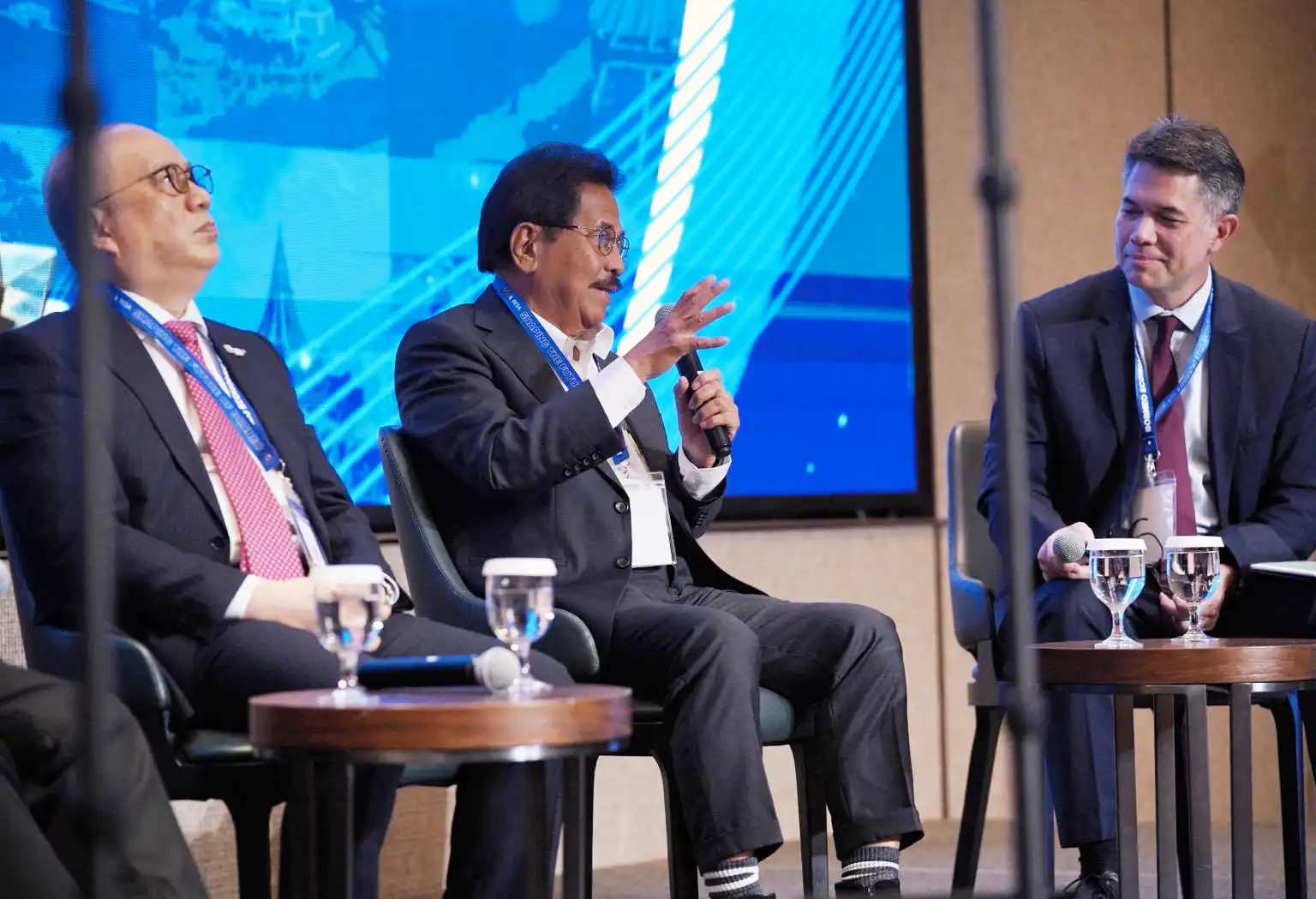
The joint submission reflects key points raised during the Inaugural Indonesia-Australia Business Roundtable held at the Indonesia Economic Summit 2026, convened by the Indonesian Business Council, the Australian Government, and the Business Council of Australia, and bringing together senior business and government representatives from Indonesia and Australia.
Since entering into force in 2020, IA-CEPA has helped strengthen economic ties between the two countries, including through growing trade flows and increased business engagement. For IBC, the General Review is an important opportunity to build on that progress by ensuring the agreement remains responsive to the practical needs of businesses and investors on both sides.
William Sabandar, COO of the Indonesia Business Council, noted that IA-CEPA has provided an important foundation for the Indonesia-Australia economic relationship, and that the General Review is an opportunity to strengthen that foundation by addressing the practical issues that continue to affect investor confidence, project execution, and long-term business certainty. “From the perspective of the Indonesian private sector, the priority now is to make the partnership more predictable, more implementation-oriented, and more responsive to the needs of businesses operating in both markets,” he said.
The submission outlines six priority areas for further improvement under IA-CEPA, namely labour market and skills mobility, regulatory consistency, financial and taxation systems, public infrastructure procurement, agricultural trade and food security, and trade infrastructure and logistics connectivity.
Through these recommendations, IBC and its Australian counterparts highlight the importance of building a more reliable and investment-friendly operating environment. This includes more consistent policy implementation, more predictable permit and licensing processes, clearer tax treatment, stronger project bankability, and better support for skills development and logistics connectivity.
IBC views this collaboration as a constructive example of how the private sector in both countries can contribute practical input to strengthen bilateral economic cooperation. The joint submission underscores a shared interest in ensuring IA-CEPA not only supports trade growth but also creates a stronger foundation for long-term investment, capability building, and economic resilience.
As Indonesia advances its growth agenda and seeks to attract higher-quality investment, IBC believes that deeper cooperation with Australia can support strategic sectors, including infrastructure, food security, skills development, energy transition, logistics, and industrial development.
IBC remains committed to supporting constructive dialogue between the private sector and both governments to ensure IA-CEPA delivers more meaningful outcomes for trade, investment, and long-term economic partnership.