IBC Participates in Nikkei Forum Future of Asia 2026, Highlights Energy Security as Regional Growth Priority
The Indonesian Business Council (IBC) participated in the Nikkei Forum Future of Asia 2026 through the panel discussion “Energy Conundrum: How Can Asia Keep…
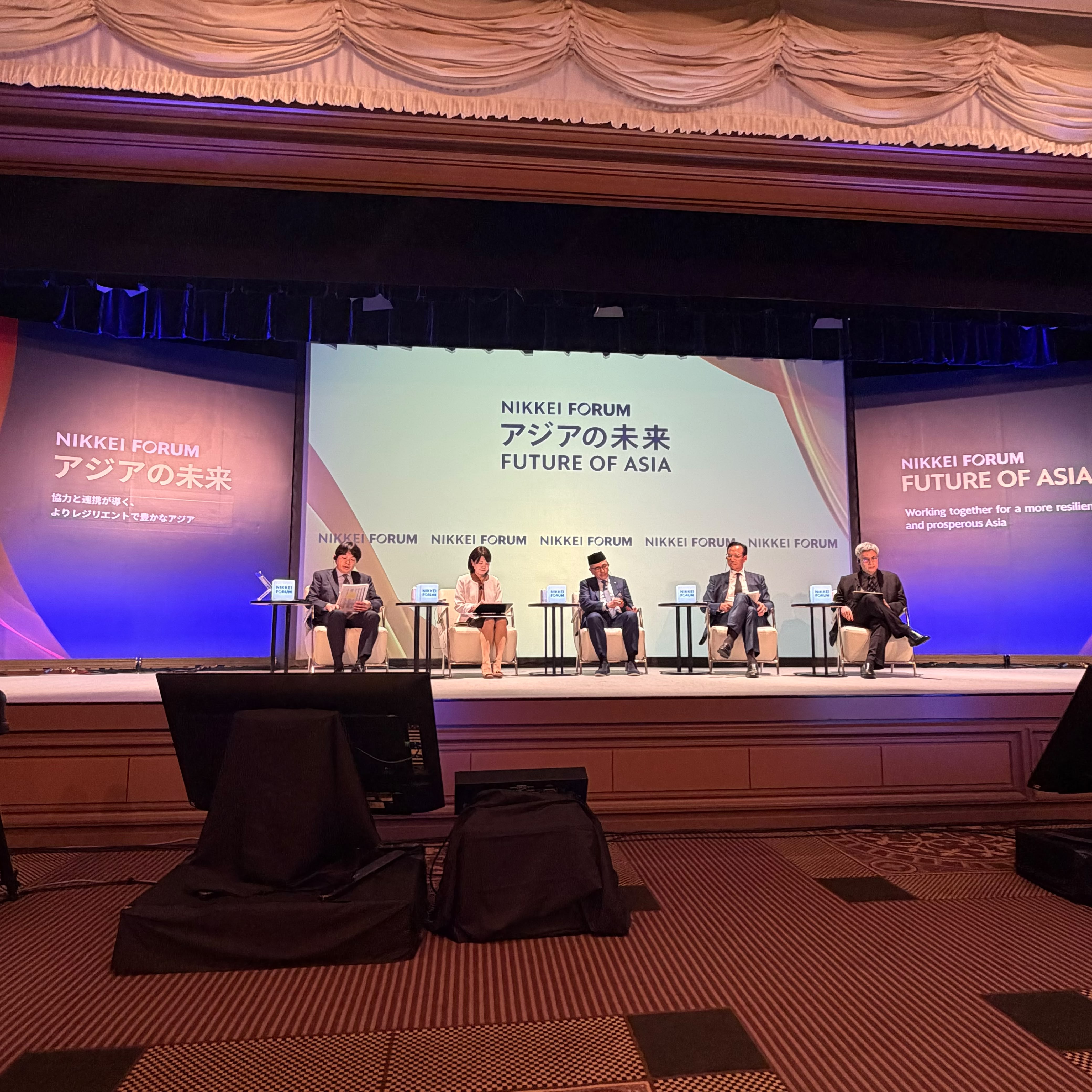
The Indonesian Business Council (IBC) participated in the Nikkei Forum Future of Asia 2026 through the panel discussion “Energy Conundrum: How Can Asia Keep Its Growth Engine Running?” The session brought together perspectives from business, policy, and energy experts, including IBC Chair of the Board of Trustees Arsjad Rasjid; Former Minister of Finance, Thailand Korn Chatikavanij; Director for Energy Policy, Economic Research Institute for ASEAN and East Asia (ERIA) Nuki Agya Utama; and Member of the Board, International Environment and Economy Institute Sumiko Takeuchi.
The discussion focused on how Asia can sustain growth while facing rising energy security risks and the need to accelerate decarbonization. Recent developments around the Strait of Hormuz have highlighted the region’s vulnerability, as around 20 percent of global oil flows pass through the strategic chokepoint. For Indonesia and many ASEAN economies, the exposure is not only through direct imports from the Middle East, but also through regional energy trading hubs.
IBC underlined that energy security must be viewed as part of Asia’s growth strategy. Reliable, affordable, and sustainable energy is essential for industrial activity, investment confidence, logistics, and household resilience. At the same time, decarbonization should not be framed as a trade-off against energy security. The region needs a pragmatic transition pathway that meets current energy needs while preparing for a cleaner, more resilient future.
The forum also highlighted the importance of regional cooperation, particularly by accelerating the ASEAN Power Grid and developing strategic oil and fuel reserves. These initiatives should be treated not only as infrastructure projects but as strategic assets for regional resilience.
Japan’s role as a strategic partner was also emphasized, especially in technology, financing, grid connectivity, and clean energy development. For IBC, Asia’s energy agenda requires practical implementation, stronger cross-border collaboration, and investment structures that combine commercial viability with long-term strategic interests.