

Jakarta, February 3, 2026 — Indonesia’s competitiveness is increasingly being tested by rising production costs, intensifying regional competition, and global economic uncertainty. In this context, productivity needs to once again become a key agenda item to maintain the quality of economic growth. The 2026 Indonesia Economic Summit (IES) reaffirmed this commitment through a session. Charting Indonesia’s Productive State: Building a Whole of Society National Productivity Movement, which encourages the productivity agenda to be more concrete, measurable, and aligned with the needs of the real sector.
“Productivity is the key to ensuring that the Indonesian business world remains competitive and able to grow sustainably amidst the dynamics of the global economy,” said Deputy Minister of National Development Planning/National Development Planning Agency, Febrian Alphyanto Ruddyard. He emphasized that growth is determined by how productively our systems work, how decisions are made, how fast things move, and how much value is created from existing efforts.
This session was initiated by the Indonesian Business Council (IBC) Institute, together with the Indonesian Chamber of Commerce and Industry Institute, the APINDO Research Institute, the HIPMI Institute and the Prasasti Center for Policy Studies. The five business association research institutions agreed to position productivity as a strategic issue for the sustainability of Indonesia’s economic growth.
“At IBC, we define productivity more broadly. It is not only about output per worker, but also about efficiency, quality, and the purpose behind how we use time, design systems, and structure the economy. That is why we promote productivity as a collective movement involving all elements of society,” said IBC Policy & Program Director, Prayoga Wiradisuria.
Through this forum, business actors and stakeholders are encouraging the consolidation of a national productivity agenda that integrates policy and operational practices in the business world. Productivity is not merely a policy framework; it also needs to be translated into practical steps at the sector and company levels. Furthermore, the Forum promotes an inclusive productivity movement that involves the government, business, the workforce, educational institutions, and communities.
In line with this, discussions at the forum emphasized the importance of advancing the productivity agenda through collective action in a collaborative national productivity movement. This agenda encourages the involvement of the government, businesses, and other stakeholders, with an emphasis on concrete, measurable implementation at the sector and institutional levels.
Because of that, Febrian is encouraging a national productivity movement involving the private sector, academia, local governments, and communities. The government plays a key role in paving the way, removing barriers and providing incentives, but productivity gains occur when businesses change how they operate on a daily basis. In tune, Prayoga emphasized the importance of alignment between policy direction and implementation in the field to ensure the national productivity movement runs effectively.
Through collaboration among business associations and stakeholders, this discussion is expected to strengthen stakeholders’ roles in the national productivity agenda and accelerate Indonesia’s future economic transformation.
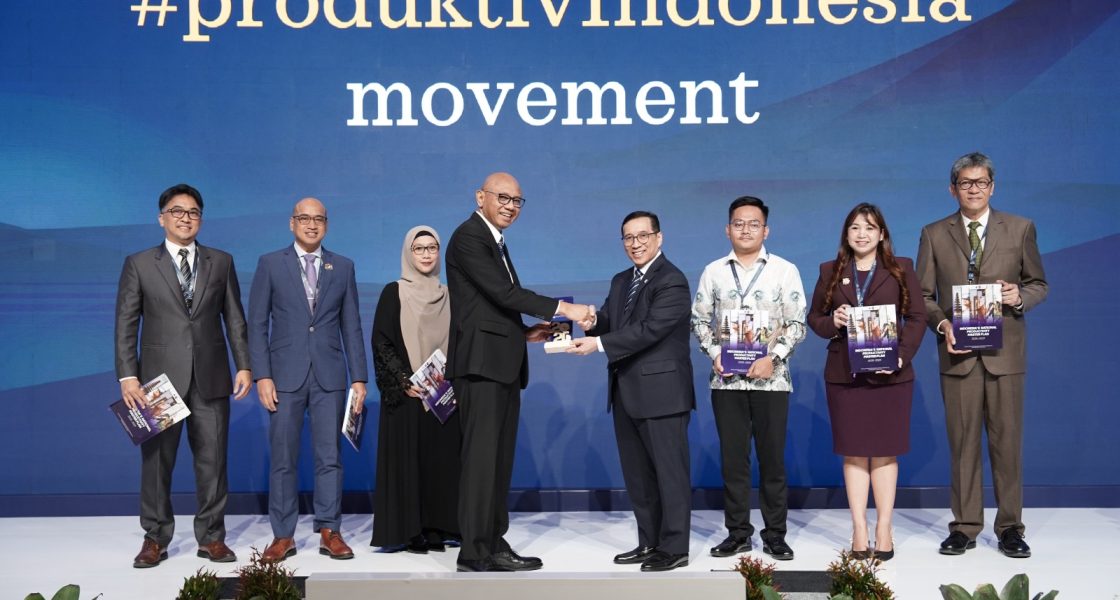
In this session, the Deputy Minister of National Development Planning/National Development Planning Agency, Febrian Alphyanto Ruddyard, also submitted the National Productivity Masterplan (2025-2029) to the Business Association Research Institute, marking the start of the national productivity movement.